


Polyurethane is a hugely versatile material and shares many characteristics with natural rubber – so much so that many people assume it is a type of rubber! However, while there are similarities between polyurethane and rubber, there are also many differences – and our experts have outlined some of the key things you should know in this regard to help.
After all, knowing about the main differences can help inform your decision, and we’ve outlined some of the main things you should know to help. But if you still have any further questions, please don’t hesitate to contact us, and we’ll do our best to help!
Quick Comparison: Polyurethane vs Rubber
Polyurethane and rubber are both elastomeric materials, but polyurethane offers superior abrasion resistance, higher load-bearing capacity, and better chemical stability. Rubber, on the other hand, provides excellent natural elasticity and cost efficiency in many general-purpose applications.
What is Polyurethane?
Before we go any further, it’s first worth considering what polyurethane actually is. At its simplest, polyurethane is a type of polymer that’s widely used in many modern applications. The material is widely considered a type of plastic, but in reality, it’s technically not; similarly, some people assume that it must be a type of rubber due to its properties, but this isn’t quite true. In fact, polyurethane is in its own category.
There are numerous great properties of polyurethane that make it incredibly popular these days. For example, it can be both hard or soft in nature; what’s more, it’s also an incredibly flexible material and is easy to craft into different shapes, thereby making it exceptionally versatile for many applications.
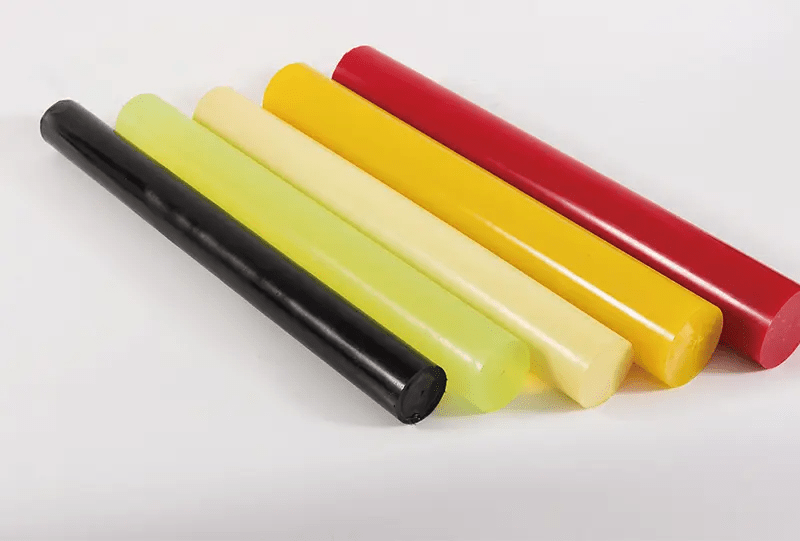
Key PU Material Properties
Polyurethane materials are valued for their balanced mechanical performance. Some of the most important properties include:
Abrasion Resistance
Polyurethane elastomers offer significantly higher abrasion resistance than most rubber materials. This makes them ideal for high-wear applications such as wheels, conveyor parts, and industrial linings.
Load-Bearing Capacity
PU can withstand higher loads without permanent deformation. This is especially important in heavy-duty industrial environments.
Oil and Chemical Resistance
Unlike many types of rubber, polyurethane performs well when exposed to oils, greases, and solvents, making it suitable for mechanical and automotive applications.
Customizable Hardness
Polyurethane can be manufactured in a wide range of hardness levels (from soft Shore A grades to rigid Shore D grades), allowing engineers to tailor the material to specific needs.
Tear and Impact Strength
PU demonstrates excellent tear resistance and impact absorption, reducing the likelihood of cracking or structural failure under stress.
These material properties explain why polyurethane is often chosen over rubber in demanding industrial environments.
What are the Differences Between Polyurethane and Rubber?
While polyurethane offers many benefits and similarities to rubber, there are also quite a few noteworthy differences to remember. Some of the main differences between polyurethane and rubber include the following points.
#1 Natural vs Artificial Production Method
One of the biggest differences between PU and rubber lies in the method of production. Indeed, polyurethane is a man-made compound, whereas rubber is often available as a natural product (although synthetic forms of rubber are also made).
#2 Rigidity vs Flexibility
When considering the differences between polyurethane and rubber, another factor to account for is the variations in terms of rigidity. Indeed, polyurethane materials offer much more freedom than rubber, meaning that they can be made to offer either flexibility or rigidity. This, in turn, gives users a greater range of options overall in terms of how they use the material.
#3 Temperature Resistance
Temperature resistance is often a significant requirement for many businesses, and this is highly important to keep in mind when considering the differences between rubber and polyurethane.
Since polyurethane is much more resistant to high temperatures than rubber, it’s versatile in a wide range of applications. Moreover, it’s often much less likely to become brittle when exposed to cold conditions, making it more reliable in cooler temperatures.
#4 Price
Generally speaking, polyurethane is a more affordable option than rubber, making it a popular material for brands that need a cost-effective but reliable product.
Polyurethane vs Rubber: Performance Comparison
When comparing polyurethane and rubber, the differences become clearer when evaluating specific performance characteristics.
| Property | Polyurethane | Rubber |
|---|---|---|
| Abrasion Resistance | Excellent | Moderate |
| Load Bearing Strength | High | Moderate |
| Oil Resistance | Strong | Varies by type |
| Elastic Recovery | Good | Excellent |
| Temperature Flexibility | Stable across wider range | Can harden in cold |
| Cost | Moderate | Often lower |
In general, polyurethane is preferred for applications requiring durability and structural strength, while rubber remains a strong option when maximum elasticity and cost efficiency are priorities.
When Should You Choose Polyurethane Instead of Rubber?
Choosing between polyurethane and rubber ultimately depends on the operating environment and performance requirements.
Choose polyurethane when:
- High abrasion resistance is critical
- Equipment operates under heavy loads
- Exposure to oils or chemicals is expected
- Long service life is a priority
- Custom hardness levels are required
Choose rubber when:
- Maximum elasticity and rebound are essential
- Cost sensitivity is a major concern
- The application involves natural vibration damping
By carefully evaluating these factors, businesses can select the material that delivers the best balance of performance and cost.
Final Thoughts
The differences between polyurethane and rubber can sometimes be hard to ascertain, especially given that the two materials often seem so similar on the surface. Nevertheless, keeping the differences in mind can help you choose which material is best suited to your requirements. If you have further questions, please contact us at pengde2@pengde-pu.com.

