


In modern manufacturing, the industrial roll is a critical component in production lines and automated equipment. It plays a vital role in conveying materials, providing support, applying pressure, and protecting surfaces, directly affecting production efficiency, product quality, and equipment lifespan.
In various industrial applications, such as ceramic machinery, packaging and printing equipment, woodworking, and food processing lines, the selection and performance of industrial rolls are top concerns for users.
Common challenges industrial users face include:
- Short roller lifespan requiring frequent replacement
- Slippage or material jamming at high speeds
- Rubber rollers aging quickly under harsh conditions
- Confusion about material selection and performance standards
This article provides a comprehensive guide to the functions, applications, material selection, and customization options for industrial rolls, helping manufacturers and procurement specialists make informed decisions.
What Is an Industrial Roll?
Definition and Working Principle
An industrial roll is a rotating component installed in machinery that uses rolling friction to transport materials, provide support, and guide movement.
Key functions include:
- Smooth material handling to prevent surface damage
- Applying uniform pressure for forming and laminating processes
- Guiding materials to ensure continuous production
The material, hardness, and surface treatment of the roll directly determine its friction coefficient, wear resistance, and service life.
Common Types of Industrial Rolls
| Type | Features | Typical Applications |
|---|---|---|
| PU industrial roll | High wear resistance, excellent elasticity, oil and aging resistant | High-speed production lines, ceramic machinery, packaging equipment |
| Rubber roll | High initial friction, low cost | Light-load equipment, low-speed conveyors |
| Metal roll | High strength, heat resistant | Heavy-duty industrial machinery, calendering equipment |
| Composite roll | Combines multiple materials | Specialized industrial requirements |
Among these, PU industrial rolls are widely preferred due to their balanced performance in most industrial applications.
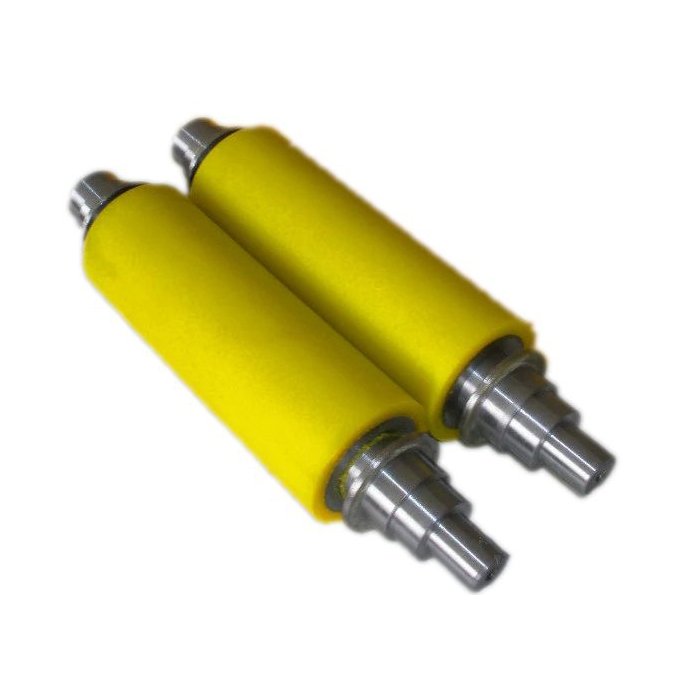
Core Functions of Industrial Rolls in Industrial Application
1. Material Conveying and Handling
- Function: Ensures stable material transport, preventing slippage, folding, or damage
- User Challenge: Rubber rollers may slip under high-speed operation, causing downtime or product waste
- Solution: PU industrial rolls maintain a stable friction coefficient and perform reliably even during continuous operation
2. Pressure Support and Forming
- Function: Applies uniform pressure in laminating, coating, or pressing processes
- User Challenge: Rubber rollers may deform under heat or pressure, resulting in uneven products
- Solution: PU industrial rolls offer excellent elasticity and fast rebound, maintaining consistent pressure and product quality
3. Surface Protection and Stability
- Function: Absorbs impact and vibration, protecting material surfaces from scratches or deformation
- User Challenge: Metal or low-quality rubber rolls can scratch products during long-term use
- Solution: PU rolls have flexible surfaces ideal for precision industrial applications
Key Industrial Application Areas
1. Ceramic Machinery Industry
- Applications: Tile transport, polishing, glazing lines
- Requirements: High load resistance, dust tolerance, stable friction
- Recommended Roll: PU industrial roll
2. Packaging and Printing Equipment
- Applications: Transporting paper, films, and packaging materials
- Requirements: Consistent friction to prevent slippage
- Recommended Roll: PU or high-performance rubber rolls; PU is more durable
3. Woodworking and Panel Processing
- Applications: Panel pressing and surface finishing
- Requirements: High wear resistance, elasticity, smooth surface
- Recommended Roll: PU industrial roll
4. Food and Beverage Processing
- Applications: Material transport in food production lines
- Requirements: Oil resistance, easy to clean, non-toxic
- Recommended Roll: Food-grade PU industrial roll
5. Automated Manufacturing Systems
- Applications: Smart production lines, automated conveyors
- Requirements: Long continuous operation, high precision
- Recommended Roll: High-performance PU industrial roll
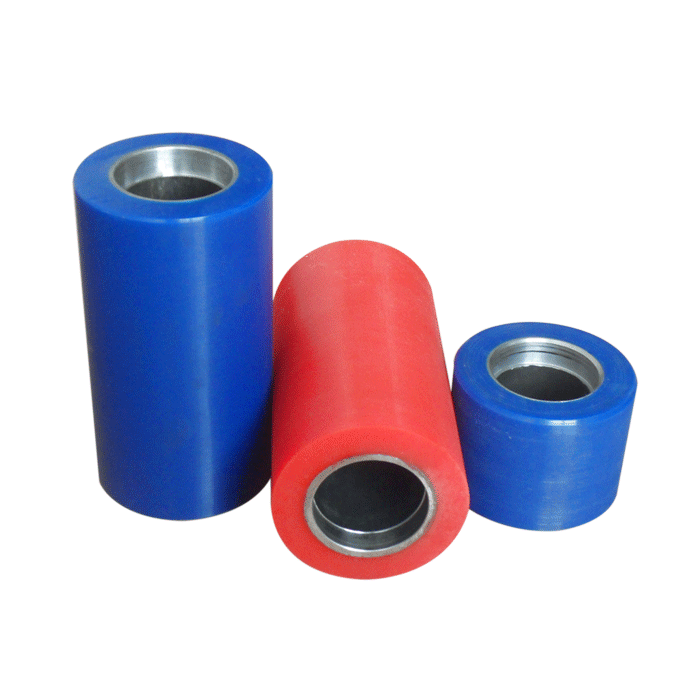
Why PU Industrial Rolls Are Widely Used
- High Wear Resistance: Typically 2–5 times longer lifespan than rubber rolls, maintaining stable performance under friction.
- Excellent Elasticity and Load Capacity: Supports heavy loads while retaining shape and stability.
- Resistance to Oil, Chemicals, and Aging: Performs reliably in harsh industrial environments.
- Long-Term Stability: Reduces maintenance costs and improves production efficiency.
Material Selection and Performance Comparison
| Performance | PU Industrial Roll | Rubber Roll | Metal Roll |
|---|---|---|---|
| Wear Resistance | ★★★★★ | ★★☆☆☆ | ★★★★☆ |
| Elasticity | ★★★★★ | ★★★★☆ | ★☆☆☆☆ |
| Aging Resistance | ★★★★★ | ★★★☆☆ | ★★★★★ |
| High-Speed Stability | ★★★★★ | ★★☆☆☆ | ★★★☆☆ |
| Maintenance Cost | Low | High | Medium |
Conclusion: PU industrial rolls provide the best balance of durability, performance, and cost-effectiveness in most industrial applications.
Custom Industrial Roll Solutions by PENGDE
With over 15 years of experience in PU manufacturing, PENGDE offers fully customized industrial rolls:
- Size and Structure: Diameters, lengths, shaft cores, and mounting configurations
- Hardness and Surface Treatments: Shore A 60–90+, surface textures, anti-slip treatments
- Industry-Specific Optimization: Tailored for ceramic machinery, automated production lines, and other industrial applications to maximize friction, wear resistance, and load-bearing performance
How to Choose the Right Industrial Roll
Consider the following factors:
- Load Capacity: Select hardness and material according to equipment pressure
- Working Environment: Temperature, oil exposure, and dust conditions
- Operating Speed: High-speed lines require higher wear resistance and stable friction
- Maintenance Frequency: PU industrial rolls significantly extend replacement cycles
FAQ
Q1: Which industries commonly use industrial rolls?
Ceramic machinery, packaging and printing, woodworking, food processing, and automated manufacturing lines all extensively use industrial rolls.
Q2: Why are PU industrial rolls more durable than rubber?
PU’s dense molecular structure offers superior wear resistance and aging stability for long-term operation.
Q3: Can industrial rolls be customized for special equipment?
Yes, PENGDE provides full customization of dimensions, hardness, and surface texture.
Q4: How long does a PU industrial roll typically last?
Depending on operating conditions, PU rolls generally last 2–5 times longer than standard rubber rolls.
Conclusion
In all industrial applications, the industrial roll is a key component that ensures equipment stability and production efficiency. Compared to traditional rubber or metal rollers, PU industrial rolls deliver superior wear resistance, elasticity, and environmental adaptability, making them the preferred choice in modern manufacturing.
With 15 years of PU manufacturing expertise and comprehensive customization capabilities, PENGDE provides high-performance PU industrial roll solutions worldwide, helping businesses improve productivity, reduce maintenance costs, and achieve reliable long-term industrial operation.
Get Your Custom PU Industrial Roll Solution Today! Contact us at pengde2@pengde-pu.com.

