


In modern industrial production, the choice of materials directly affects equipment efficiency and product quality. Molded polyurethane parts have become essential components in a wide range of industrial machines due to their exceptional wear resistance, elasticity, impact resistance, and chemical stability.
Whether in ceramic machinery, packaging and printing equipment, woodworking, or automated food production lines, selecting high-performance molded polyurethane parts can significantly extend equipment lifespan, reduce maintenance costs, and improve overall production efficiency. This article explores the key performance features, practical industrial applications, and selection guidelines for molded polyurethane parts, helping engineers and procurement specialists make informed decisions.
What Are Molded Polyurethane Parts?
Molded polyurethane parts are industrial components made using specialized molding processes. Compared to rubber, metal, or standard plastics, PU materials offer adjustable hardness, high elasticity, and outstanding wear resistance, allowing them to perform reliably in complex industrial environments.
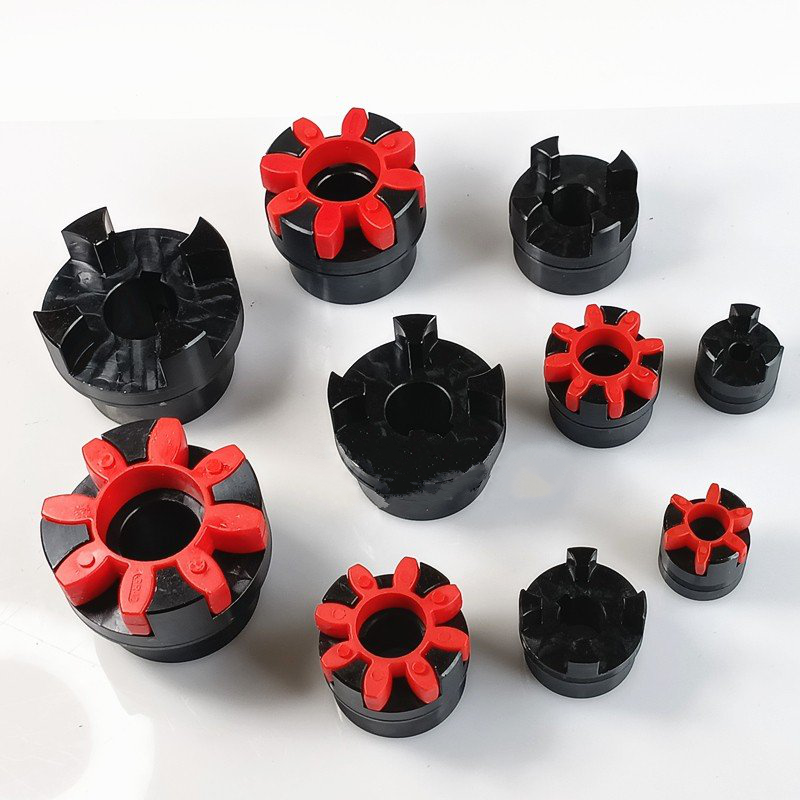
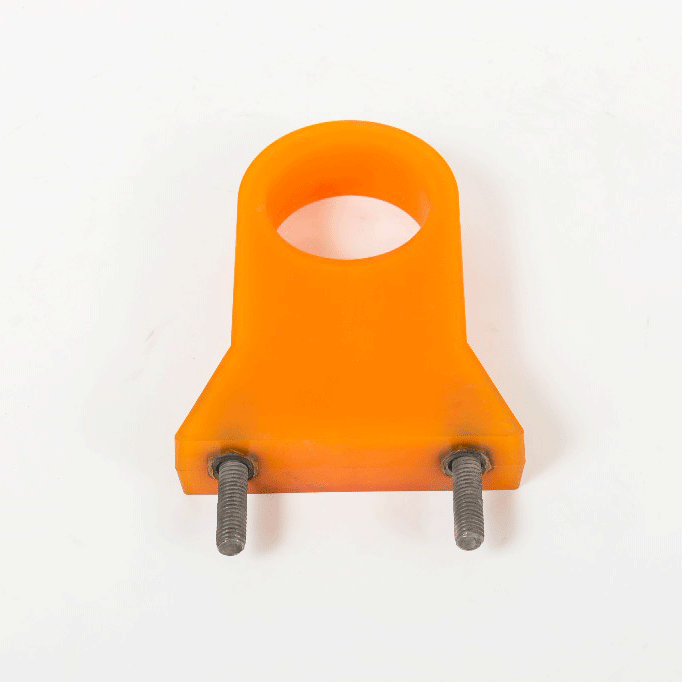
Common applications include rollers, squeegees, conveyor components, impact buffers, and custom non-standard industrial parts. Their main advantage lies in customizability, allowing dimensions, hardness, surface texture, and elasticity to be tailored for specific industrial requirements.
Key Performance Features of Molded Polyurethane Parts
The customizable performance of molded polyurethane parts is the foundation of their wide industrial use. At PENGDE, we optimize material formulations, hardness, and molding techniques to meet diverse performance requirements.
1. Chemical Resistance
- Feature: PU materials withstand industrial oils, mild acids, bases, and solvents
- Industrial Value: Prevents premature aging in ceramic machinery, printing, and packaging equipment
- Customization: Formulations can be adjusted to meet different chemical exposure levels
2. Flexibility / Elasticity
- Feature: Shore A hardness customizable from 60–90+, covering soft to rigid needs
- Industrial Value: Enables efficient rebound and load-bearing in press rollers, squeegees, or impact buffers
- Customization: Elasticity and deformation properties can be tailored according to load and machine design
3. Impact Resistance
- Feature: Absorbs mechanical shocks to protect equipment and materials
- Industrial Value: Reduces equipment damage and material loss, improving production continuity
- Customization: Hardness, formulation, and mold design can be optimized for impact resistance
4. Wear Resistance
- Feature: High-wear PU formulations maintain surface integrity under long-term friction
- Industrial Value: Ideal for high-speed conveyors, ceramic processing, and printing machinery, extending part lifespan
- Customization: Surface texture and friction coefficient can be tailored to industrial load requirements
5. Tear / Tensile Strength
- Feature: PU parts resist high tensile and localized tearing
- Industrial Value: Ensures reliability for non-standard components, seals, and conveyor parts
- Customization: Strength can be adjusted through molding process and material formulation
6. Dimensional Stability
- Feature: Maintains shape and size over long-term use
- Industrial Value: Ensures equipment precision and consistent assembly
- Customization: Material composition can be adapted for temperature and humidity conditions
7. Surface Hardness / Texture
- Feature: Friction coefficient, hardness, and surface texture (smooth or anti-slip) can be customized
- Industrial Value: Provides stable operation for rollers, squeegees, and conveyor components, reducing product damage
- Customization: High-precision surface characteristics achievable through molding and material formulation
Industrial Applications of Molded Polyurethane Parts
Molded polyurethane parts deliver exceptional performance across various industries, helping businesses improve efficiency and reduce maintenance costs:
1. Ceramic Machinery
- Applications: PU rollers, squeegees
- Benefits: Wear resistance, chemical resistance, stable load-bearing
2. Packaging and Printing Equipment
- Applications: Conveyor rollers, friction components
- Benefits: Stable friction, anti-slip, impact resistance, longer equipment lifespan
3. Woodworking and Panel Processing
- Applications: Press rollers, surface protection parts
- Benefits: High elasticity, wear resistance, dimensional stability
4. Food Processing and Automation
- Applications: Conveyor lines, automated equipment components
- Benefits: Oil resistance, easy cleaning, impact resistance
Why Choose Molded Polyurethane Parts Over Other Materials?
| Performance | PU Parts | Rubber | Metal |
|---|---|---|---|
| Chemical Resistance | ★★★★★ | ★★☆☆☆ | ★★★☆☆ |
| Flexibility | ★★★★★ | ★★★★☆ | ★☆☆☆☆ |
| Impact Resistance | ★★★★★ | ★★★☆☆ | ★★★★☆ |
| Wear Resistance | ★★★★★ | ★★☆☆☆ | ★★★★☆ |
| Maintenance Cost | Low | High | Medium |
Summary: PU parts outperform rubber and metal in chemical resistance, wear resistance, elasticity, and impact resistance, and they can be fully customized to meet industrial requirements.
PENGDE’s Customization Capabilities
With over 15 years of experience in PU molding, PENGDE offers comprehensive customization services:
- Dimensions & Structure: Diameter, length, shaft, and installation method
- Hardness & Elasticity: Shore A 60–90+, tailored to load and rebound requirements
- Surface Treatment: Texture, anti-slip, wear-resistant finishes
- Industry Optimization: Performance tuning for ceramics, automation, and other industrial applications
How to Select the Right Molded Polyurethane Parts
- Load Requirements: Select hardness and elasticity based on equipment pressure
- Operating Environment: Consider temperature, chemical exposure, and humidity
- Speed of Operation: High-speed lines require high wear resistance and stable friction
- Maintenance Cycle: PU parts extend replacement intervals and reduce downtime
- Consultation: Contact PENGDE for professional guidance on customized solutions
FAQ
Q1: How do PU parts compare to rubber parts?
A: PU parts outperform rubber in wear resistance, impact absorption, and chemical stability, offering longer service life.
Q2: How long do molded polyurethane parts typically last?
A: Depending on the environment, PU parts usually last 2–5 times longer than rubber parts.
Q3: Can molded polyurethane parts be customized for special machines?
A: Yes, PENGDE offers full customization, including dimensions, hardness, surface texture, and specific performance requirements.
Q4: How does chemical resistance affect equipment lifespan?
A: High chemical resistance prevents corrosion and material degradation, ensuring longer, stable operation of machinery.
Conclusion
In industrial production, molded polyurethane parts are essential for enhancing equipment performance and reliability. With superior chemical resistance, wear resistance, elasticity, impact resistance, and full customization options, PU parts excel in ceramic machinery, packaging and printing, woodworking, and automation lines.
PENGDE, with 15 years of PU molding experience, provides high-performance, fully customized molded polyurethane parts solutions worldwide, helping businesses improve production efficiency, reduce maintenance costs, and ensure long-term industrial reliability.
Get Your Custom PU Parts Solution Today – Contact Us: pengde2@pengde-pu.com

