


In demanding industrial environments, material failure leads to downtime, equipment damage, and increased maintenance costs. When abrasion resistance, load-bearing capacity, and durability are critical, polyurethane rubber sheets have become the preferred alternative to traditional rubber materials.
This guide explains what polyurethane rubber sheets are, why they outperform conventional rubber in high-wear applications, and how to select the right specification for your industrial needs.
What Are Polyurethane Rubber Sheets?
Polyurethane rubber sheets, often referred to as PU sheets, are high-performance elastomer sheets manufactured from polyurethane polymers. They combine the elasticity of rubber with the mechanical strength of engineering plastics.
Unlike natural rubber, polyurethane offers significantly higher abrasion resistance, tear strength, and chemical stability, making it ideal for harsh operating conditions such as mining, heavy manufacturing, and material handling systems.
Typical properties of industrial-grade polyurethane sheets include:
- Shore hardness range: 60A to 95A
- High tensile strength
- Excellent tear resistance
- Strong impact resilience
- Wide temperature tolerance
- Superior wear resistance
These characteristics allow PU sheets to maintain structural integrity even under heavy loads and continuous friction.
Polyurethane vs Traditional Rubber: Which Performs Better?
Many buyers hesitate between natural rubber sheets and polyurethane sheets. The difference becomes clear when comparing performance in high-abrasion environments.
| Property | Polyurethane Sheet | Traditional Rubber |
|---|---|---|
| Abrasion Resistance | Extremely high | Moderate |
| Load Capacity | Excellent | Medium |
| Tear Strength | High | Moderate |
| Oil Resistance | Excellent | Limited |
| Service Life | Long | Shorter |
| Cost Over Time | Lower lifecycle cost | Higher replacement frequency |
In heavy-duty applications such as conveyor liners, chutes, and impact zones, polyurethane sheets typically last several times longer than standard rubber sheets.
Although PU sheets may have a higher upfront cost, their extended lifespan significantly reduces replacement frequency and maintenance downtime.
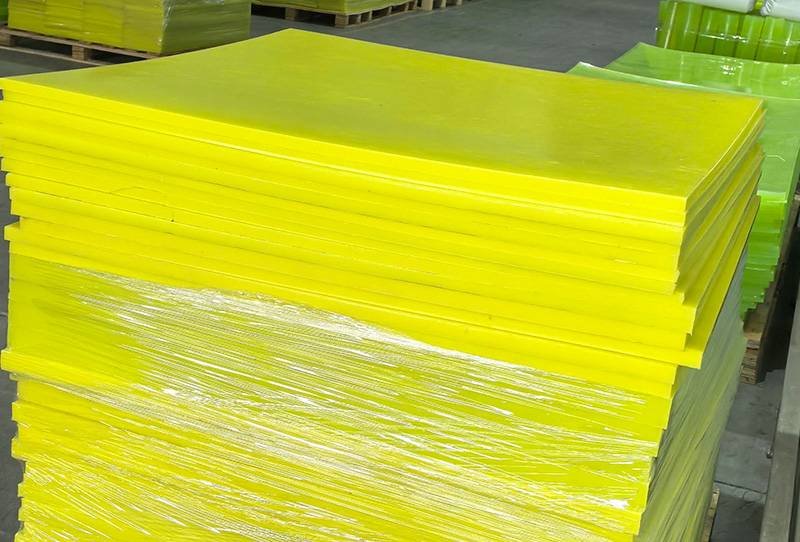
Key Advantages of Polyurethane Rubber Sheets
1. Exceptional Abrasion Resistance
Polyurethane sheets are engineered to withstand sliding, scraping, and impact abrasion. This makes them ideal for mining liners, conveyor skirts, and hopper linings.
Why it matters:
Reduced wear means fewer shutdowns and lower maintenance costs.
2. High Load-Bearing Capacity
PU sheets maintain shape under compression and dynamic loads. They resist permanent deformation even under continuous heavy weight.
Why it matters:
This ensures dimensional stability in structural and load-support applications.
3. Superior Chemical and Oil Resistance
Polyurethane resists oils, fuels, greases, and many industrial chemicals.
Why it matters:
It maintains performance in automotive workshops, chemical plants, and oil-exposed machinery.
4. Flexibility Without Cracking
Despite their strength, PU sheets remain flexible and elastic.
Why it matters:
They absorb impact and vibration without tearing.
5. Temperature Stability
Industrial PU sheets typically operate within a broad temperature range.
Why it matters:
They remain functional in both cold storage facilities and moderately high-temperature environments.
Common Industrial Applications
Polyurethane rubber sheets are widely used across industries that require wear protection and impact absorption.
Mining and Quarrying
Used as chute liners, hopper liners, screen panels, and impact pads where sliding abrasion is severe.
Automotive Manufacturing
Applied in bushings, vibration dampening components, and shock-absorbing parts.
Heavy Equipment and Machinery
Used as protective linings, machine pads, and wear strips to extend equipment lifespan.
Food and Pharmaceutical Processing
FDA-compliant PU sheets are used where hygiene and contamination resistance are critical.
Construction and Infrastructure
Applied in bridge bearings, expansion joints, and vibration isolation systems.
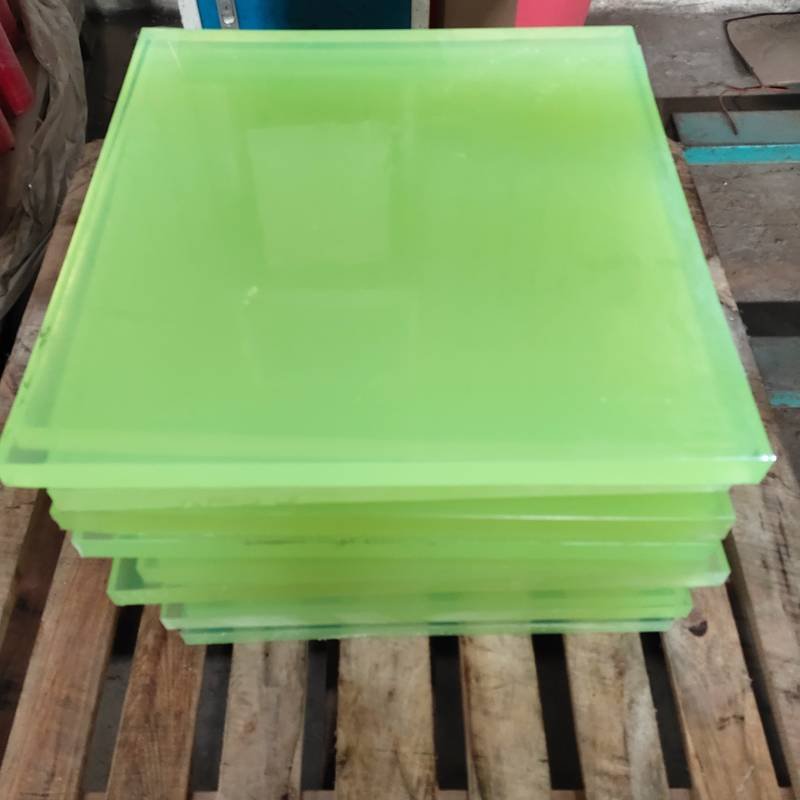
How to Choose the Right Polyurethane Rubber Sheet
Selecting the correct PU sheet requires evaluating your operating conditions carefully.
Step 1: Identify the Type of Wear
- Sliding abrasion
- Impact abrasion
- Cutting or tearing stress
Different wear types may require different hardness levels.
Step 2: Determine the Required Hardness (Shore A)
- 60A–70A: Softer, better for cushioning and sealing
- 80A–95A: Harder, ideal for abrasion and heavy load applications
Harder sheets typically offer better wear resistance.
Step 3: Select Proper Thickness
- Thin sheets: Flexible, suitable for light-duty use
- Thick sheets: Better impact absorption and wear resistance
Higher abrasion environments require thicker material.
Step 4: Evaluate Chemical Exposure
If exposed to oils or chemicals, ensure the polyurethane formulation is compatible.
Step 5: Consider Temperature Conditions
Extreme heat or cold may require customized PU formulations.
Common Mistakes When Selecting PU Sheets
Avoid these frequent errors:
- Choosing overly soft material for heavy load applications
- Ignoring chemical compatibility
- Selecting thickness based only on cost
- Over-specifying when moderate-grade material would suffice
- Failing to evaluate long-term wear performance
Correct selection improves both cost efficiency and equipment lifespan.
FAQ
What Shore hardness is best for abrasion resistance?
Generally, 85A to 95A offers optimal abrasion resistance for heavy industrial applications.
Are polyurethane sheets better than rubber in mining?
Yes. In high-wear environments, polyurethane often outperforms rubber in durability and lifespan.
How long do polyurethane sheets last?
Service life depends on application conditions, but PU sheets typically last significantly longer than standard rubber alternatives.
Can polyurethane sheets be customized?
Yes. Hardness, thickness, color, and dimensions can be customized based on operational requirements.
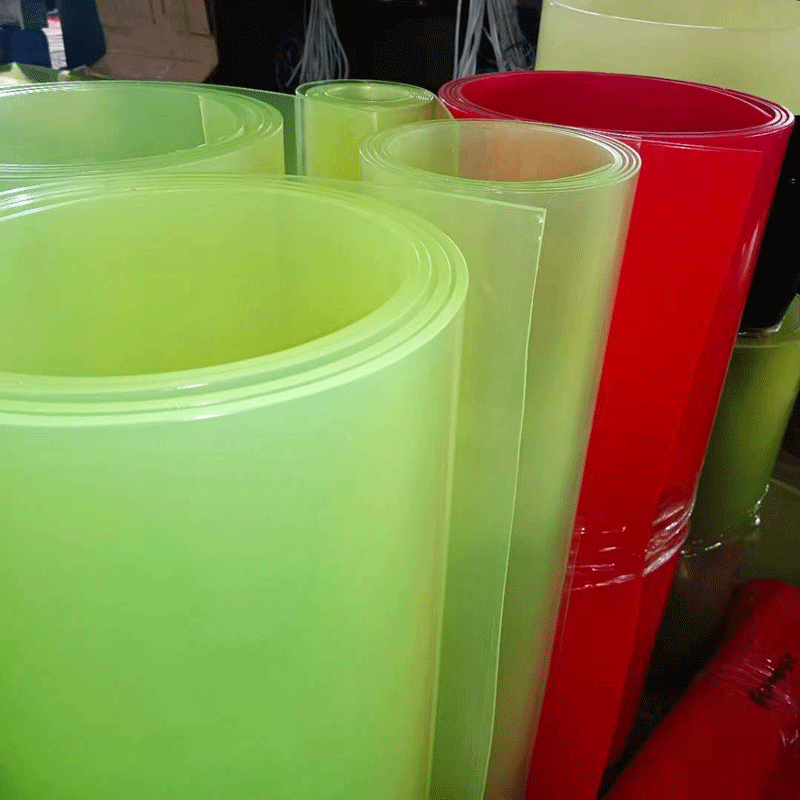
Why Choose PENGDE for Polyurethane Rubber Sheets?
Founded in 2008, PENGDE specializes in high-performance polyurethane products for industrial applications. With extensive experience in rubber and plastic engineering, we provide:
- Customized hardness and thickness options
- Industrial-grade abrasion-resistant formulations
- Stable quality control
- Global supply capability
- Technical consultation support
Our goal is to help clients reduce downtime, extend equipment lifespan, and improve operational efficiency through durable polyurethane solutions.
For product inquiries or technical consultation, contact us at:
Final Thoughts
Choosing the right polyurethane rubber sheet is not simply about material selection. It directly impacts equipment protection, maintenance frequency, and long-term operating costs.
By understanding abrasion type, hardness level, thickness requirements, and chemical exposure, you can select a polyurethane sheet that delivers reliable performance and long-term value.
If you are looking for abrasion-resistant polyurethane solutions tailored to your application, PENGDE is ready to support your project.

