


Finding the opportune materials for your business’s trading needs can often seem tough. Nevertheless, materials like PU sheeting present a valuable, dependable, and practical solution for various different applications – and this just so happens to be our area of expertise here at Pengde excels. In line with this, today, we’re taking a look at some of the different properties of polyurethane sheeting. Hopefully, this should help inform your own trading decisions, too.
What are Polyurethane Sheets?
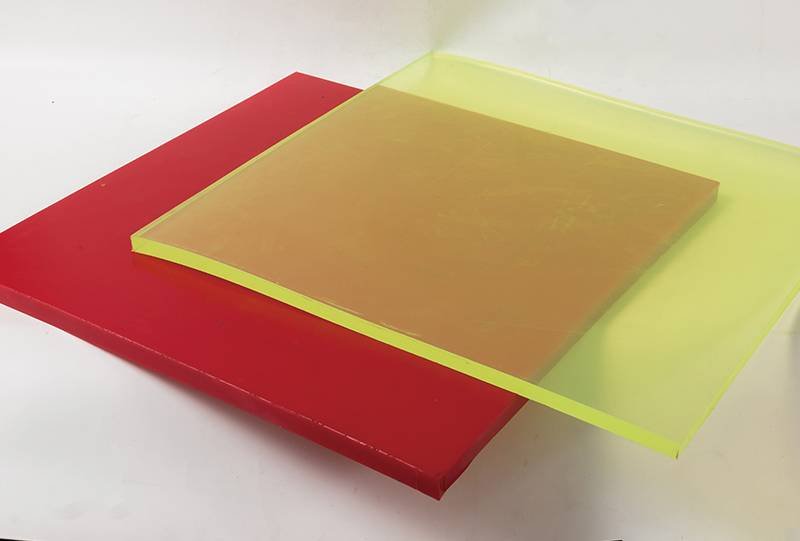
Polyurethane sheets are specialist polymers created from numerous different materials, offering a highly practical and reliable option for many situations. These materials are rolled out into a thin sheet, providing numerous properties that help make them versatile and reliable options for a range of applications.
What are the Properties of PU Sheets?
PU sheets offer a wealth of properties that help make them popular options for many projects and applications. Of course, it’s well worth keeping in mind here that the exact properties will depend on the specifications to which the sheets are made.
Some of the main properties include the following:
-Abrasion and tear resistance – In contrast to many other materials, polyurethane can potentially provide superior resistance to abrasion and tearing. Hence, for applications demanding durability against friction or which utilise moving parts, these sheets present an excellent solution.
-Flexible solutions – PU sheets provide exceptional flexibility and elasticity. This helps them mold to different shapes, making them highly practical and reliable materials for many different scenarios.
-Excellent load-bearing capacity – Polyurethane sheets boast exceptional ability to bear loads and provide a strong, durable material. Despite this, they remain lightweight and easy to move, making them an excellent alternative to traditional materials such as metal.
-Range of shore hardnesses – No matter the hardness level you require for your project, polyurethane sheets might just be ideal. Indeed, since PU sheets are available in a wide array of shore hardness levels, they can often meet a wide range of hardness requirements.
-Chemical and heat resistance – PU sheets are excellent for their heat and chemical resistance; as such, if you need a lasting material that can withstand extreme conditions, polyurethane might be ideal.
The aforementioned points are just a few of the most notable polyurethane properties you should know to help inform your decision.
PU Sheet Hardness Guide: Shore A vs Shore D
Polyurethane sheets are available in a wide range of hardness levels. Choosing the right hardness is critical because it affects flexibility, load-bearing capacity, and durability.
| Hardness Type | Typical Shore Range | Flexibility | Ideal Applications |
|---|---|---|---|
| Shore A | 40A – 95A | Soft to medium | Flexible liners, gaskets, vibration damping, cushioning |
| Shore D | 50D – 80D | Medium to hard | Structural parts, wear strips, rollers, heavy-load applications |
Tips for Choosing Hardness:
- Use Shore A for cushioning, vibration absorption, or applications requiring material to conform to irregular surfaces.
- Use Shore D for parts exposed to high pressure, wear, or load-bearing conditions.
- When unsure, consult a material expert to select the ideal hardness for your specific application.
Engineering Considerations for Polyurethane Sheet Material
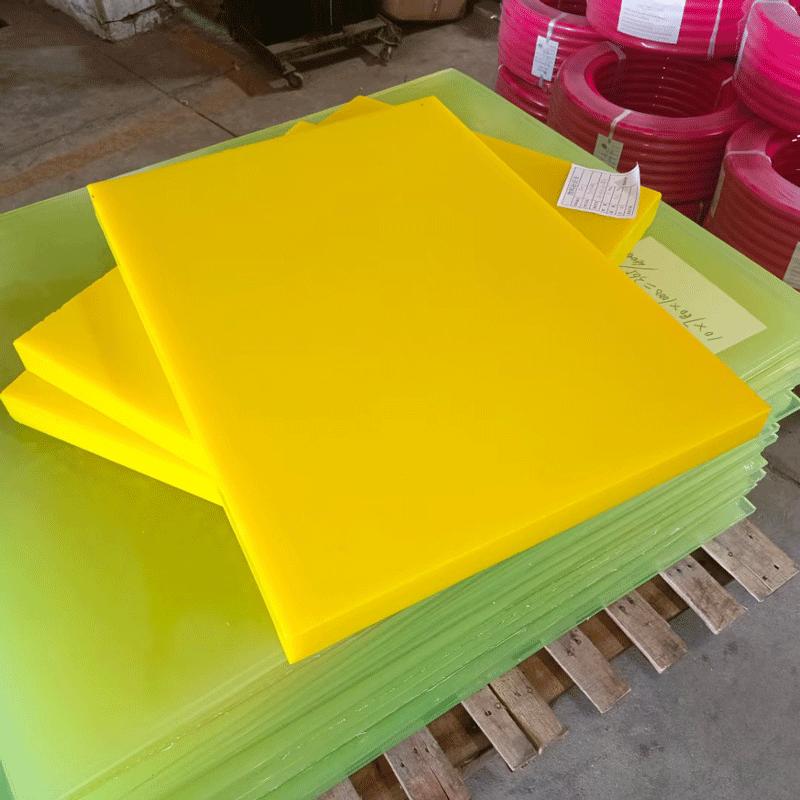
When polyurethane sheets are specified for industrial use, material selection is typically guided by operating conditions rather than general descriptions. Common evaluation factors include:
- Hardness range required for load-bearing or flexibility
- Sheet thickness based on structural or wear requirements
- Expected abrasion level during operation
- Contact pressure or impact frequency
- Environmental exposure, such as oils, moisture, or temperature variation
PU Sheets vs Other Materials
When deciding between PU sheets and alternative materials like PVC or rubber, consider the following:
| Property | PU Sheets | PVC Sheets | Rubber Sheets |
|---|---|---|---|
| Flexibility | High | Medium | High |
| Abrasion Resistance | Excellent | Good | Moderate |
| Chemical Resistance | High | Medium | Low |
| Load-Bearing | Medium to High | Medium | Low |
| Longevity | Long | Medium | Short |
Conclusion: PU sheets generally provide superior durability, flexibility, and resistance to wear and chemicals compared to PVC and rubber, making them the preferred choice for industrial applications.
Customization Options for PU Sheets
Polyurethane sheets can be tailored to meet your exact requirements. Custom options include:
- Thickness: From thin 1 mm sheets to heavy-duty 50+ mm sheets.
- Color: Standard or custom colors for easy identification or branding.
- Hardness: Shore A and Shore D options to match flexibility and load requirements.
- Surface Finish: Smooth, textured, or matte depending on application.
- Cut-to-size: Sheets can be pre-cut to your desired dimensions, reducing installation time.
These customization options make PU sheets highly versatile for industries ranging from automotive to manufacturing and mining.
Applications of Polyurethane Sheets Across Industries
Polyurethane sheets are used in a range of industrial and manufacturing environments. Typical applications of PU plastic sheet material include:
- Wear liners and protective panels
- Rollers and guide components
- Gaskets and sealing elements
- Vibration-damping pads
- Impact or noise-reduction components
These applications are commonly found in manufacturing, material handling, automotive, mining, and related industrial sectors.
Industries That Benefit from PU Sheets
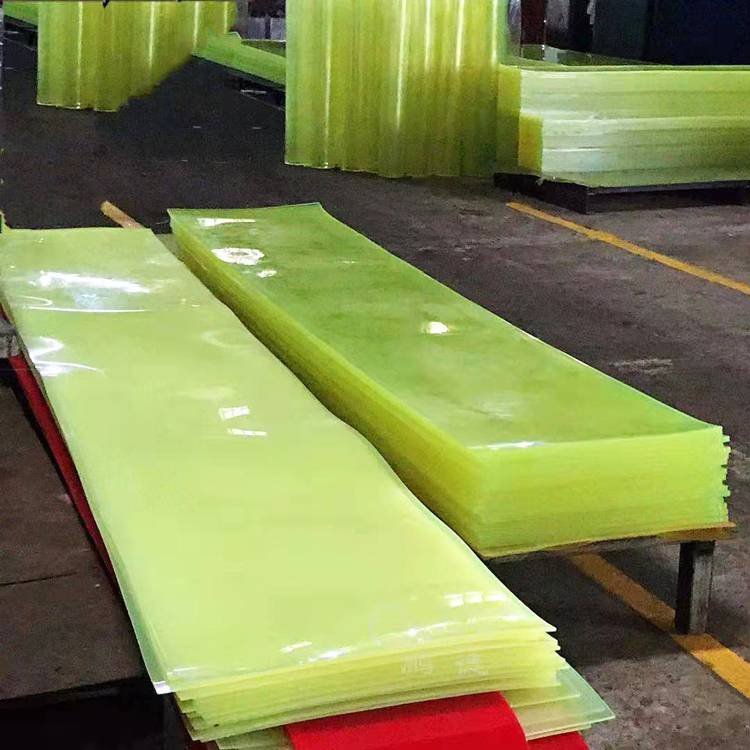
PU sheets are widely used across multiple industries due to their strength, durability, and flexibility:
- Automotive: Wear strips, gaskets, vibration damping, and protective liners.
- Manufacturing & Material Handling: Rollers, guides, and protective panels.
- Mining & Heavy Industry: Impact-resistant liners, abrasion-resistant panels, and machinery components.
- Packaging & Food Processing: Non-marking and hygienic surfaces for conveyor belts or food handling.
- Construction: Cushioning, sealants, and protective barriers.
Each industry uses PU sheets differently, but the material’s durability and adaptability remain consistent advantages.
How Brands can Implement PU Sheets in Industry Applications?
There are numerous different applications for PU sheets in industries. As such, if you have been looking for a new product to apply to your own manufacturing efforts, these versatile materials could undoubtedly prove an exciting new option.
Most often, sheeting will be used in the industrial sector for applications such as linings, scrapers, machined components, and gaskets; however, they can also be used in applications such as for seating construction and the like.
Final Thoughts
If you have been looking for top-quality materials, polyurethane sheets could offer a valuable option. Indeed, these highly versatile materials are useful in a huge array of applications, and as such, it’s well worth considering how they might work for your needs. If you have further questions, please contact us at pengde2@pengde-pu.com.
FAQ
Q1: What is polyurethane sheet material commonly used for?
Polyurethane sheet material is commonly used in industrial components such as wear parts, liners, rollers, seals, and protective elements where resistance to abrasion and mechanical stress is required.
Q2: How does PU plastic sheet differ from other plastic materials?
Compared with many standard plastics, PU plastic sheets typically offer higher elasticity and abrasion resistance, which can be relevant in dynamic or high-wear applications.
Q3: Can polyurethane sheets be produced in custom specifications?
Yes. Polyurethane sheets are often produced in custom hardness levels, thicknesses, and formats to meet specific application or fabrication requirements.

