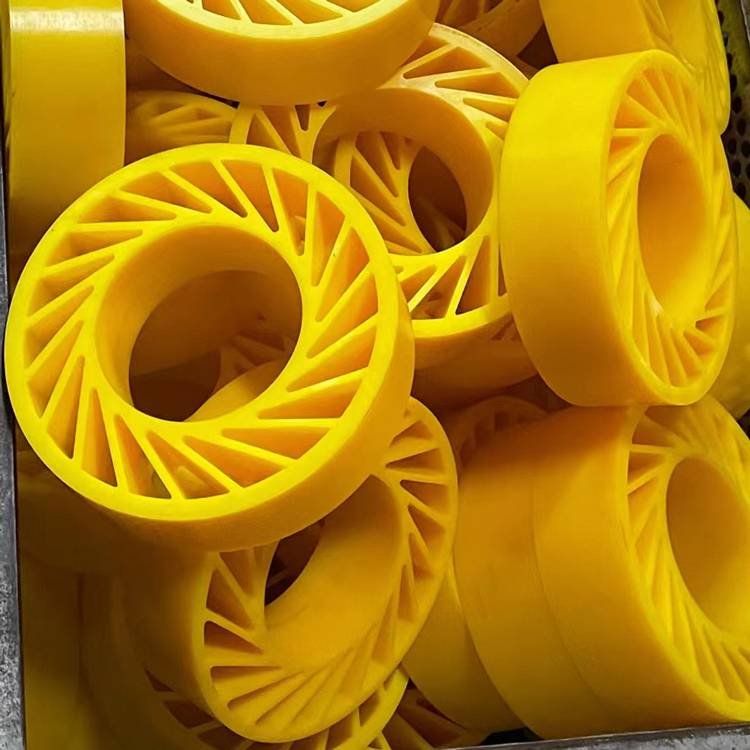
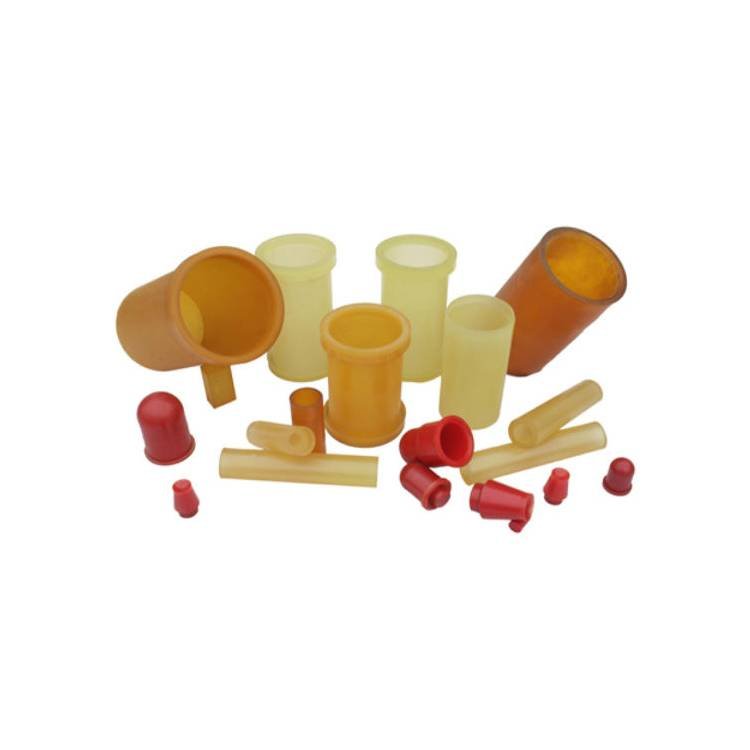
Selecting the right polyurethane sheet for your industrial or commercial application is critical. Hardness determines flexibility, wear resistance, and load-bearing performance—choosing incorrectly can shorten service life or reduce efficiency. This guide explains the difference between Shore A and Shore D hardness, helping you make the right choice.

What Is Shore Hardness?
Shore hardness is a measure of a material’s resistance to indentation. It is commonly used to determine the hardness of elastomers, plastics, and rubbers.
There are multiple Shore scales, but the most relevant for polyurethane sheets are:
- Shore A – Measures the hardness of soft, flexible materials like rubber and soft polyurethane
- Shore D – Measures harder, more rigid polyurethane materials used for structural or high-load applications
Shore A vs. Shore D: What’s the Difference?
| Property | Shore A | Shore D |
|---|---|---|
| Typical Hardness Range | 30A to 95A | 50D to 80D |
| Material Type | Softer, more elastic polyurethane | Harder, more rigid polyurethane |
| Applications | Seals, gaskets, flexible liners | Structural parts, wheels, heavy-duty pads |
| Indentation Tool | Rounded tip | Pointed tip |
| Flexibility | High | Low to medium |
| Abrasion Resistance | Good | Excellent |
Examples:
- A 70A PU sheet feels like a car tire – firm but flexible
- A 60D PU sheet feels like hard plastic – suitable for impact-absorbing structural parts
Applications & Examples
Different Shore hardness levels are suitable for different industrial applications. Here are some practical examples to guide your selection:
Shore A (Flexible / Soft PU Sheets)
- 40–50A: Cushioning, gaskets, vibration absorption
- 60–70A: Flexible liners, conveyor rollers, light-duty impact pads
- 80–95A: Semi-rigid parts, impact protection, protective layers
Shore D (Rigid / Hard PU Sheets)
- 50–60D: Wear strips, wheels, heavy-duty pads
- 65–75D: Structural components under moderate load
- 75–80D: High-load bearing parts, industrial machinery inserts
Tip: Selecting the right hardness ensures optimal performance, reduces wear, and prevents premature failure of your PU sheets in your application.
How to Select the Right Hardness?
Choosing the correct hardness depends on the working environment and performance requirements.
Use Shore A if:
- You need flexible, elastic sheets
- The application involves sealing, cushioning, or vibration absorption
- Your sheet must conform to irregular surfaces or slight movements
Use Shore D if:
- You need rigid sheets that can resist deformation under pressure
- The sheet is used for wear strips, impact blocks, or load-bearing parts
- High chemical or abrasion resistance is essential
Decision Guide – Choosing the Right PU Hardness
To select the correct polyurethane sheet hardness for your application, follow these steps:
- Assess Load & Pressure Requirements
- High-load or structural applications → consider Shore D
- Low-load or cushioning applications → consider Shore A
- Determine Flexibility Needs
- Need bending, vibration absorption, or sealing → Shore A
- Need rigidity and shape retention → Shore D
- Check Environmental Factors
- Exposure to chemicals, oils, or abrasion → higher Shore D or reinforced Shore A
- Extreme temperature or outdoor use → consider chemical/UV-resistant formulations
- Match Application Examples
- Use the Applications & Examples table to match hardness to your real scenario
- Consult Technical Team if Unsure
- For custom thickness, color, or extreme conditions, always confirm with experts
Custom Hardness Available at PENGDE NEW MATERIAL TECHNOLOGY CO., LTD
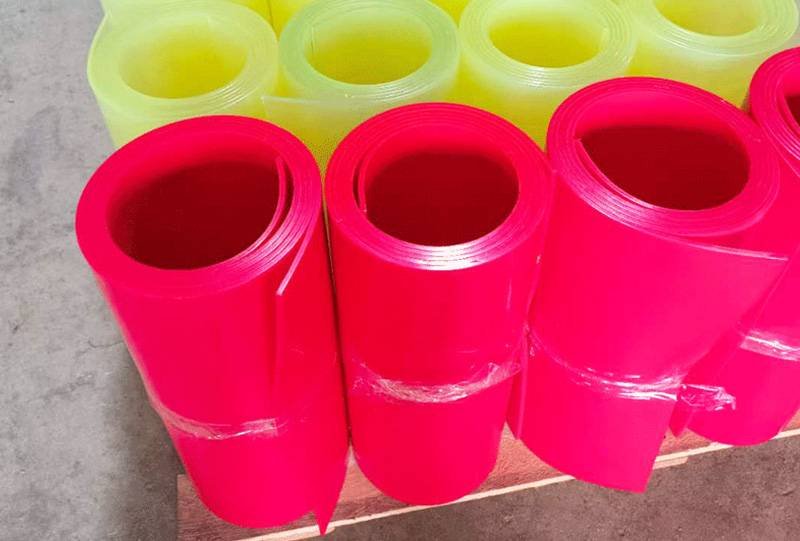
At PENGDE NEW MATERIAL TECHNOLOGY CO., LTD, we manufacture polyurethane rubber sheets in a wide range of Shore hardness levels:
- Shore A: From 40A (very soft) to 95A (very firm)
- Shore D: From 50D (medium hard) to 80D (very hard)
We offer OEM & ODM services, including color, thickness, and hardness customization to match your exact needs—whether for industrial machinery, automotive parts, mining equipment, or general engineering use.
FAQ
Q1: Can I use Shore A sheets in high-load applications?
A: Shore A sheets are flexible and elastic, ideal for cushioning and vibration absorption. For high-load applications, Shore D sheets are more suitable.
Q2: Are Shore A and Shore D interchangeable?
A: No. Shore A is softer and more flexible, whereas Shore D is harder and more rigid. Choose based on your load and flexibility requirements.
Q3: How do I measure the Shore hardness of a PU sheet?
A: A durometer tool is used to measure indentation resistance. Shore A uses a rounded tip, Shore D uses a pointed tip.
Q4: Can custom Shore hardness be produced?
A: Yes. PENGDE offers customization in Shore A and Shore D ranges, including thickness, color, and formulation adjustments.
Q5: Does hardness affect chemical or abrasion resistance?
A: Generally, harder Shore D sheets offer higher abrasion resistance and load-bearing capacity, while Shore A provides flexibility and cushioning.
Need Help Choosing?
If you’re unsure which hardness level is right for your application, our technical team is here to help.
Contact us today for expert guidance and a free quote.
Email: pengde2@pengde-pu.com
Company: PENGDE NEW MATERIAL TECHNOLOGY CO., LTD
We manufacture polyurethane sheets that deliver the perfect balance between flexibility and strength—built to perform in high-wear, high-load environments.