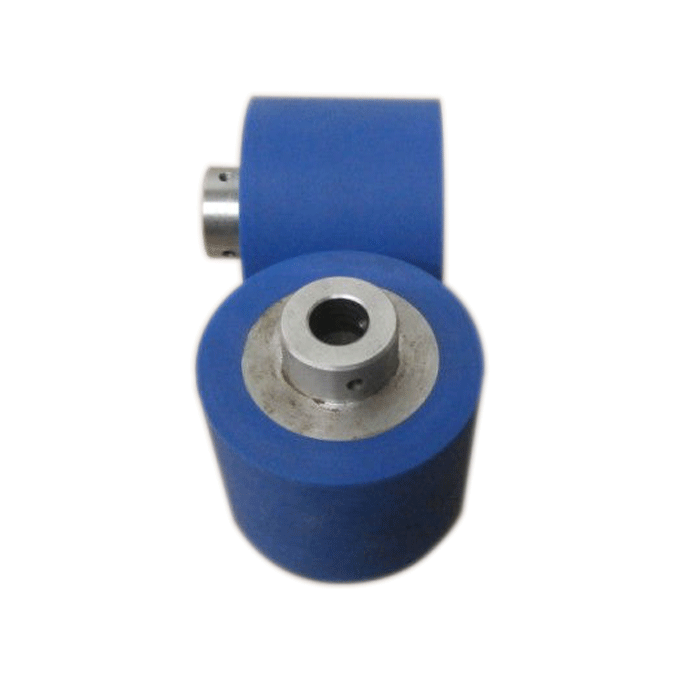
In modern currency handling equipment, the friction wheel plays a critical role in gripping, feeding, and separating banknotes. It is one of the most important currency counting machine parts, directly affecting counting accuracy, operating stability, and overall machine efficiency.
Many manufacturers and operators face common issues such as:
- Slower counting speed
- Frequent paper jams or double feeding
- Rapid wear of friction wheels requiring constant replacement
In most cases, these problems are closely related to material selection. While traditional rubber wheels have long been used in the industry, more high-performance machines are now adopting PU friction wheels to achieve better durability and reliability.
This article explains, from both engineering and practical perspectives, why PU friction wheels consistently outperform rubber alternatives in currency counting machine parts.
What Is a Friction Wheel in Currency Counting Machine Parts?
Core Working Principle
During operation, the friction wheel generates controlled friction against the banknotes to achieve:
- Precise gripping of single notes
- Continuous and smooth feeding
- Effective separation of overlapping bills
To perform reliably, a friction wheel must provide:
- Stable friction coefficient
- Long-lasting elasticity
- High wear resistance
Any decline in these properties directly affects counting performance.
How Material Choice Impacts Performance
From an engineering standpoint, the wheel material determines several critical characteristics:
| Material Property | Impact on Machine Performance |
|---|---|
| Friction stability | Counting accuracy |
| Wear resistance | Replacement frequency |
| Elastic recovery | Operational smoothness |
| Environmental resistance | Long-term reliability |
Therefore, a friction wheel is not a simple rubber component but a precision functional part driven by material science.

Overview of Rubber Friction Wheels: Advantages and Real Limitations
Practical Benefits of Rubber Wheels
Rubber friction wheels were widely used in earlier machines mainly because they offer:
- Low initial cost
- Good early-stage grip
- Mature manufacturing processes
They can still function adequately in low-speed, light-duty equipment.
Why Rubber Friction Wheels Wear Out Quickly
Due to the natural structure of rubber materials, several limitations exist:
Limited wear resistance
Continuous friction quickly polishes the surface, reducing grip performance.
Poor heat stability
High-speed operation generates heat that softens rubber and causes permanent deformation.
Susceptibility to aging and cracking
Exposure to air, dust, and oil accelerates material degradation.
As a result:
- Replacement cycles are short
- Counting accuracy decreases over time
- Maintenance costs rise significantly
Key Advantages of PU Friction Wheels in Currency Counting Machine Parts
Superior Wear Resistance and Longer Service Life
Polyurethane features a stronger molecular structure designed to resist abrasion:
- Wear life typically 2 to 5 times longer than rubber
- Surface maintains consistent friction performance over time
This leads to:
- Fewer replacements
- Lower operating costs
Stable Friction Coefficient for Accurate Counting
PU friction wheels maintain reliable grip even during prolonged operation:
- Minimal friction fluctuation
- Less sensitivity to temperature changes
This stability ensures:
- Smooth banknote feeding
- Reduced jamming and double counting
- Higher counting accuracy
Excellent Elasticity and Shock Absorption
PU combines strength with flexibility:
- Absorbs mechanical shock
- Reduces vibration and noise
This creates smoother machine operation and protects other components from wear.
Strong Resistance to Oil, Dust, and Aging
In real working environments, PU friction wheels perform consistently:
- Resistant to oil contamination
- High oxidation and aging resistance
- Maintains properties under continuous use
This makes them ideal for long-term, high-load currency handling systems.
PU vs Rubber Friction Wheel: Practical Performance Comparison
| Performance Aspect | PU Friction Wheel | Rubber Friction Wheel |
|---|---|---|
| Service life | 2–5× longer | Short |
| Friction stability | High | Declines over time |
| Deformation resistance | Strong | Weak |
| Aging resistance | Excellent | Moderate |
| Maintenance cost | Low | High |
From a long-term economic perspective, PU friction wheels clearly offer better value.
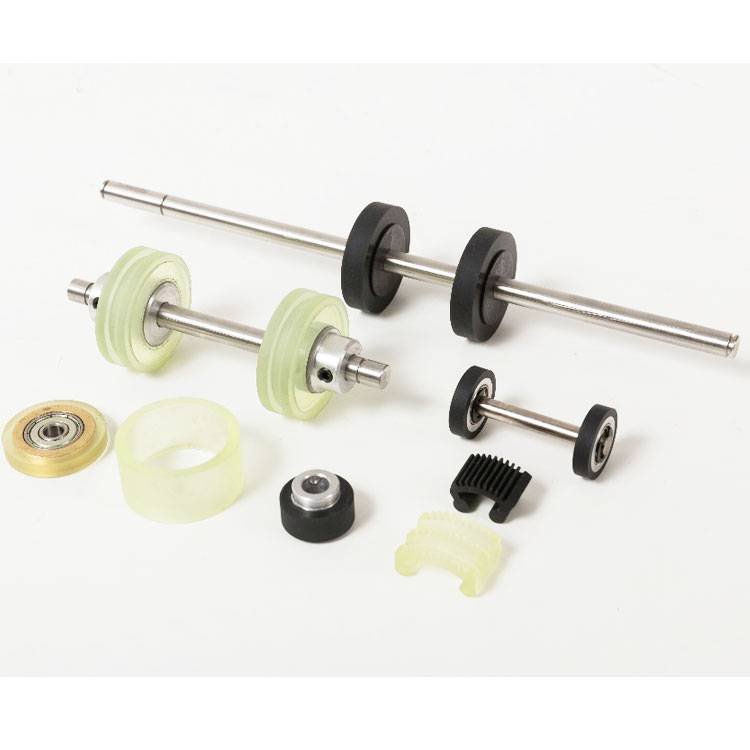
Why PU Friction Wheels Have Become the Industry Standard in Currency Counting Machine Parts
As currency counting machines continue to evolve toward:
- Higher speeds
- Longer continuous operation
- Stricter accuracy requirements
Traditional rubber materials struggle to meet modern performance demands. In contrast, PU friction wheels deliver the durability and stability required for advanced equipment.
Many leading machine manufacturers now use PU friction wheels as standard components in high-end models.
Custom PU Friction Wheel Solutions from PENGDE
With over 15 years of experience in polyurethane manufacturing, PENGDE specializes in developing and producing high-performance PU friction wheels tailored to specific machine requirements.
Optimized Material Formulations
PENGDE customizes PU properties based on application needs:
- Various hardness levels (Shore A 60–90+)
- Balanced friction and elasticity
- Enhanced durability for demanding environments
Precision Manufacturing and Quality Control
Through continuous investment in advanced equipment and processes, PENGDE ensures:
- High-precision molds
- Tight dimensional tolerances
- Comprehensive quality inspections
Every PU friction wheel delivers consistent and reliable performance.
One-Stop Industrial Parts Supply
In addition to friction wheels, PENGDE also provides:
- Rollers and wheels
- TPU belts
- PU rods and sheets
- Ceramic machinery spare parts
This one-stop procurement approach simplifies supply chains for equipment manufacturers.
How to Choose the Right PU Friction Wheel for Your Currency Counting Machine
To achieve optimal performance, consider the following factors:
Dimensional accuracy
Ensures smooth transmission and stable operation.
Hardness selection (Shore A)
| Application Need | Recommended Range |
|---|---|
| Strong grip | 60–70 |
| High wear resistance | 75–90 |
Surface design
Textured or treated surfaces can enhance friction stability.
Operating environment
Consider temperature, dust levels, and oil exposure.

Frequently Asked Questions (FAQ)
Q1: Is a PU friction wheel always better than rubber?
For high-speed and continuous operation machines, PU friction wheels provide significantly better durability and performance stability.
Q2: Why do rubber friction wheels wear out so quickly?
Rubber has lower abrasion resistance and heat stability, causing rapid surface degradation during constant friction.
Q3: Can PU friction wheels be customized for different machines?
Yes. PENGDE offers fully customized solutions based on machine structure, load conditions, and working environments.
Q4: How often should friction wheels be replaced?
Rubber wheels may require replacement every few months, while PU friction wheels typically last several times longer under similar conditions.
Conclusion
In modern currency counting machine parts, material performance plays a decisive role in machine accuracy and reliability.
Compared with traditional rubber alternatives, PU friction wheels deliver superior wear resistance, stable friction performance, strong environmental adaptability, and significantly longer service life.
Backed by over 15 years of polyurethane expertise and advanced customization capabilities, PENGDE continues to provide high-quality PU friction wheel solutions that help manufacturers reduce maintenance costs and improve overall machine performance.
Looking for high-performance PU friction wheels? Contact us at pengde2@pengde-pu.com for customized solutions.